
Eyeliner Duo RFQs: Identify Each Working End
For a gel-and-liquid eyeliner RFQ, ask the supplier to identify each working end on a marked product reference. Link its gel or liquid designation to the corresponding end, cap and model-specific instructions. Xiuhe’s title describes gel and liquid eyeliner in one set, while the gallery uses dual-ended wording. Request the actual offered arrangement rather than deriving tool functions or operating steps from the promotional images.
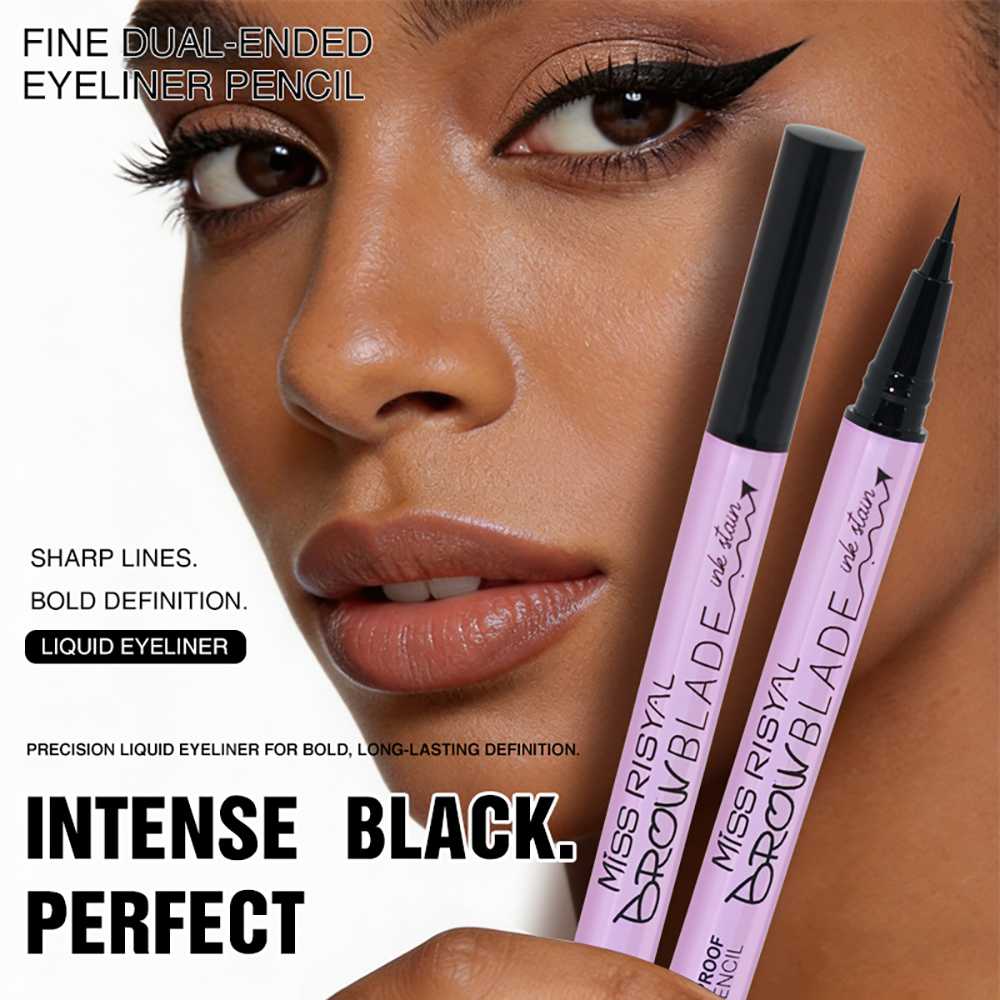
Official catalogue portrait showing the supplier’s dual-ended and liquid-eyeliner wording. These labels require a version-specific end map; promotional cosmetic results and performance wording are not adopted here.
Resolve the offered arrangement before naming the ends
The gel-and-liquid eyeliner listing describes the products as being in one set. Its gallery also uses dual-ended wording and shows different-looking working ends. Ask the supplier to identify the actual arrangement being offered, with a marked reference showing which physical item and ends the response covers.
Keep this enquiry separate from shade selection or a set-price denominator. The purchasing deliverable is an end-by-end identification sheet. It should allow the buyer to connect the supplier’s product terminology to the correct part of the quoted tool without interpreting the advertising layout as a technical specification.
Give each working end an unambiguous reference
Ask the supplier to label the ends on an appropriate product view. Use those labels consistently in the quotation and supporting instructions. If the same model appears several times in a catalogue composition, request a reference that makes the correspondence clear rather than treating every pictured view as another supplied item.
Request the supplier’s type or function name for each labelled end. Ask which end its gel designation covers and which end its liquid designation covers, or how it otherwise explains the product naming. Retain the actual response instead of assigning a type from the visible shape alone.
End-map field
Supplier response requested
Purchasing purpose
Physical reference
Marked item and end labels
Identify the areas being described
Type designation
Applicable gel, liquid or other explanation
Use the supplier’s confirmed names
Cap reference
Corresponding cap for each end
Keep supplied parts distinguishable
Instructions
Document and version covering that end
Prepare an accurate handover
Official crossed-tool reference from the same listing. Visible end shapes identify the areas to ask about, not their formulation, material, operating mechanism or verified function.
Ask for the corresponding cap and mechanism description
Request the supplier’s description of the cap or closure associated with each end. If an operating mechanism matters to the purchase, ask it to identify the actual mechanism and the applicable instructions. Keep those answers under the same end labels used on the product reference.
Do not assume that a pointed end must be sharpened or that another end extends through a particular movement. The page does not provide those operating details. Ask the supplier to explain the offered version without creating press, twist, pull or other actions from a photograph.
Request a complete instruction reference for the version
Ask for the instruction document covering the offered item and its labelled ends. Request a clear correspondence where the document uses a different model name or language. Keep any relevant parts or end illustrations connected to the complete document rather than retaining a detached marketing caption.
If the supplier proposes more than one version, request the applicable instruction reference for each. Record whether the end arrangement or cap description differs. This gives purchasing and merchandising teams an understandable product identity without turning a common product name into a claim that every version operates identically.
Another official eyeliner arrangement. Its styling and performance text remain supplier advertising; it does not provide a complete instruction sheet or a safety or wear result for the offered version.
Keep technical identity separate from promotional results
The catalogue contains styling examples and performance wording. Use the product images to locate the physical features being discussed, while relying on the supplier’s specific response for the end map. A cosmetic styling example does not establish the material, formulation or mechanism of a pictured end.
This purchasing guide gives no instructions for applying a product to the eyes and establishes no safety, waterproofness or wear result. Where another claim matters to the buyer, identify the claim and request appropriate supporting information separately from the physical end-identification sheet.
Match the identified sample to the end map
Ask the supplier to identify the sample corresponding to its marked reference and instruction revision. During a product-identity review, check that the named ends and cap references can be followed on that sample. Record a specific discrepancy against the relevant label instead of describing the entire item as incorrect.
Identify the quoted model and arrangement.
Keep the end labels consistent across documents.
Link each type designation and cap to its end.
Retain the applicable instruction revision.
For a proposed alternative, request its own map and instruction reference. A similar barrel colour or silhouette should not automatically carry the previous end-function description into a revised offer.
Send an answerable tool-identification request
Ask: “For this gel-and-liquid eyeliner offer, please identify the actual item arrangement and label each working end. Map the type names, corresponding caps and applicable instructions to those labels.” Send it through the supplier contact page. Keep the response with the quotation; the cosmetic-product articles provide wider purchasing context.
Frequently asked questions
Does a dual-ended caption provide the full end map?
Request a marked reference and the supplier’s type designation for each end of the actual quoted version.
Can end shape establish its formulation?
Keep appearance separate from the supplier’s product-specific technical description. Do not assign a formulation from the photograph.
What should accompany a version change?
The revised item and end map, cap correspondence, matching sample reference and applicable instruction document.
Gel eyeliner pencilsWorking-end identificationInstruction scope