
Nail Extension Kits: Confirm the Supplied Parts
Treat an extension kit as a supplier-confirmed parts list, rather than every object visible in a photograph. For Xiuhe’s Urethane Glue Extension Kit, ask which gel containers, tools, forms, lamp and case are included in the quoted version. Identify each confirmed line with its product reference and quantity. Keep demonstration-only items outside the supply list until the supplier explicitly includes them.
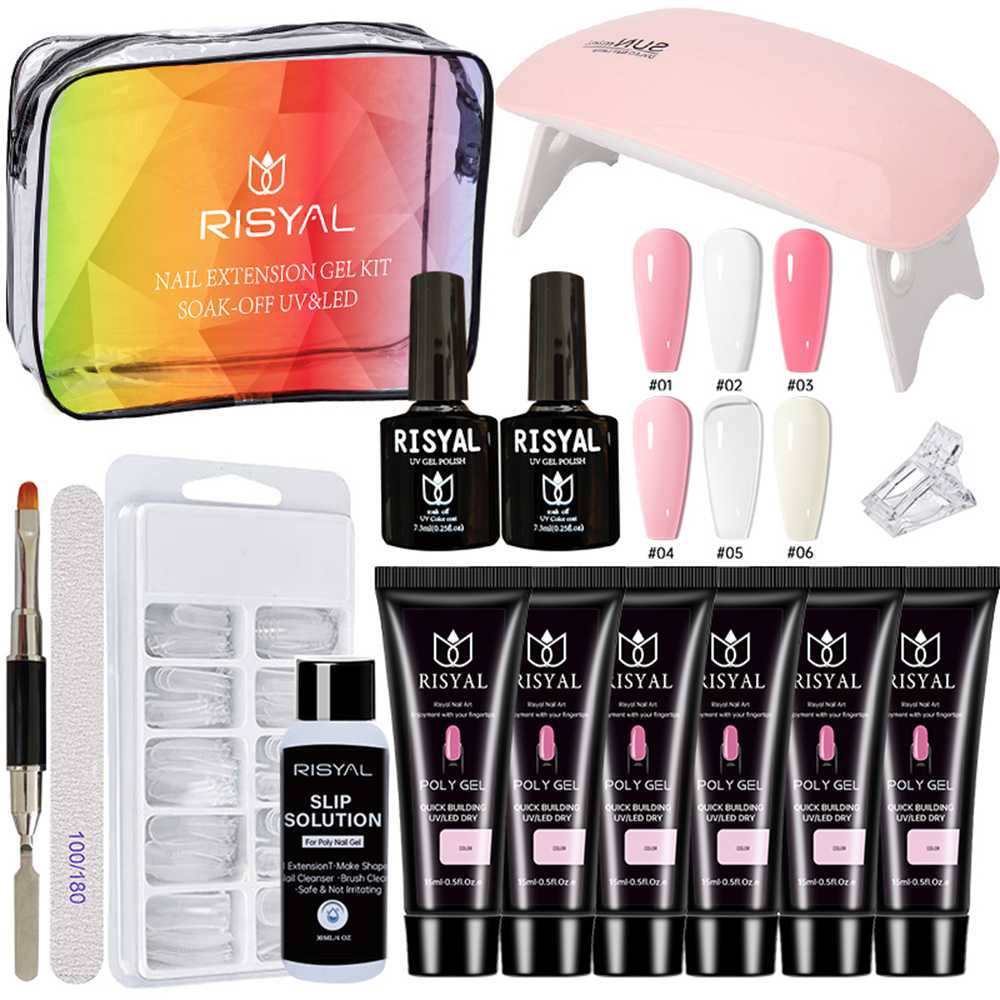
Official kit catalogue arrangement. Ask which displayed containers, tools, lamp and case are included in the selected offer; ordinary packaging marks do not establish brand ownership or authorisation.
Start with the selected kit version
The Urethane Glue Extension Kit listing shows a kit-style arrangement containing a case, containers, hand tools, clear shaped pieces and a lamp. Other associated images show a closed case and a demonstration sequence. Those references provide useful enquiry material, but they do not replace the supplier’s description of the version being quoted.
Send the selected image reference with the enquiry and ask the supplier to name the corresponding offer. Keep the catalogue name as an identifier; it does not by itself establish a chemical formulation, a verified operating method or an approved packing list.
Turn the photograph into questions about supplied parts
Prepare a provisional schedule from the visible product groups, then ask the supplier to confirm each line. Distinguish a product container from a hand tool, an accessory pack and a carrying case. This prevents an attractive group photograph from becoming an assumed contractual list.
Visible group
Question for the supplier
Information to retain
Tubes and bottles
Which exact products belong to this kit?
Product reference, label description and quantity
Hand tools and shaped pieces
Which tools and accessory packs are supplied?
Type, pack identity and counting unit
Lamp
Included, optional, or demonstration equipment?
Confirmed status and offered model reference
Case
Does the offered version include this case?
Case reference and associated kit version
Supplier-published closed-case reference. Printed count and weight information remains catalogue wording pending the itemised offer; it is not a verified kit inventory.
Define how a kit’s piece count is constructed
The supplier’s case image carries a 16-piece statement. Ask for the itemised list behind that statement instead of counting objects from the image. A pack of shaped pieces, a double-ended tool or the case itself may need an explicit counting convention. The supplier should explain how its proposed list reaches the stated total.
Keep the unit beside each quantity. A quantity of one could describe one bottle, one accessory pack or one complete kit. The itemised schedule should resolve that distinction while retaining the complete-kit reference. Do not substitute a photograph-based estimate for the supplier’s answer.
Separate demonstration equipment from included goods
An associated demonstration collage shows tools and equipment used during a manicure sequence. Ask which of these belong to the selected offer and which must be obtained separately. In particular, keep a lamp’s inclusion status distinct from its appearance in an instructional scene.
If a lamp is offered, request its exact model and the supplier’s applicable product documents. If it is excluded, retain that status on the kit schedule. Instructions and any equipment requirements should come from the supplier for the confirmed products; this article does not turn the pictured sequence into a tested use procedure.
Official demonstration collage from the same product page. It is neither our operating instruction nor proof that all illustrated tools and equipment are supplied; no printed timing or performance statement is adopted.
Identify the products inside similar containers
Several containers in a kit can look similar while representing different products. Ask the supplier to identify the proposed tubes and bottles by the references it uses in its offer. Keep any stated shade, container label and product description connected to the corresponding line, rather than transferring information from a different gallery variant.
The purpose is to establish what is supplied. A familiar bottle shape does not identify its contents, and the number of displayed colour samples does not establish the quantity of containers included. Resolve those points through the confirmed list and the matching labelled sample.
Use a complete sample to check the agreed list
For sample review, ask the supplier to identify the kit version and its current parts list. Compare the supplied items with that list, noting missing, extra or differently identified items against the relevant line. Keep an unresolved component separate from a general approval of the packaging appearance.
If the supplier proposes a substitute tool, container or case, ask for the replacement reference and an updated list. Review the change before treating the substitute as part of the accepted kit. This keeps sample approval connected to actual items rather than a generic statement that the set looks complete.
Keep the confirmed version in the quotation
Close the enquiry with one current kit description. The quotation should identify the accepted parts-list version, included and excluded equipment, and any optional additions. If an option changes the contents, describe it separately so purchasing and receiving teams can follow the same offer.
Identify the selected catalogue kit reference.
Obtain a line-by-line contents and quantity schedule.
Resolve case, lamp and accessory inclusion.
Keep sample changes tied to the revised list.
Send the component questions through the supplier contact page. The cosmetics sourcing articles provide related buying context; the confirmed quotation defines this kit’s actual scope.
Frequently asked questions
Does a lamp in the photograph mean it is included?
Confirm its status for the selected offer. A group or demonstration image is not an itemised supply agreement.
How should a stated piece count be checked?
Ask the supplier for the list and counting units behind the total, including its treatment of accessory packs and the case.
What happens when one part changes?
Identify the substitute and update the kit’s accepted parts list so sample approval, quotation and receiving use the same version.
Nail extension kitsSupplied componentsB2B cosmetics sourcing