
Gel Polish Displays: Map Bottle-Position Fit
For wholesale gel nail polish displays, ask the supplier for a position map of the proposed bottle-and-insert arrangement. Identify the offered display, the actual bottle version, the holder at each relevant position and the sample condition used to review fit. Approve that layout as a defined packing reference. A catalogue display image does not establish the included pack contents, exact cavity dimensions or transport performance.
Official catalogue appearance reference for identifying the offered sample. The image does not establish the requested seam specification, fit measurement or performance result.
Separate the display proposal from the bottle declaration
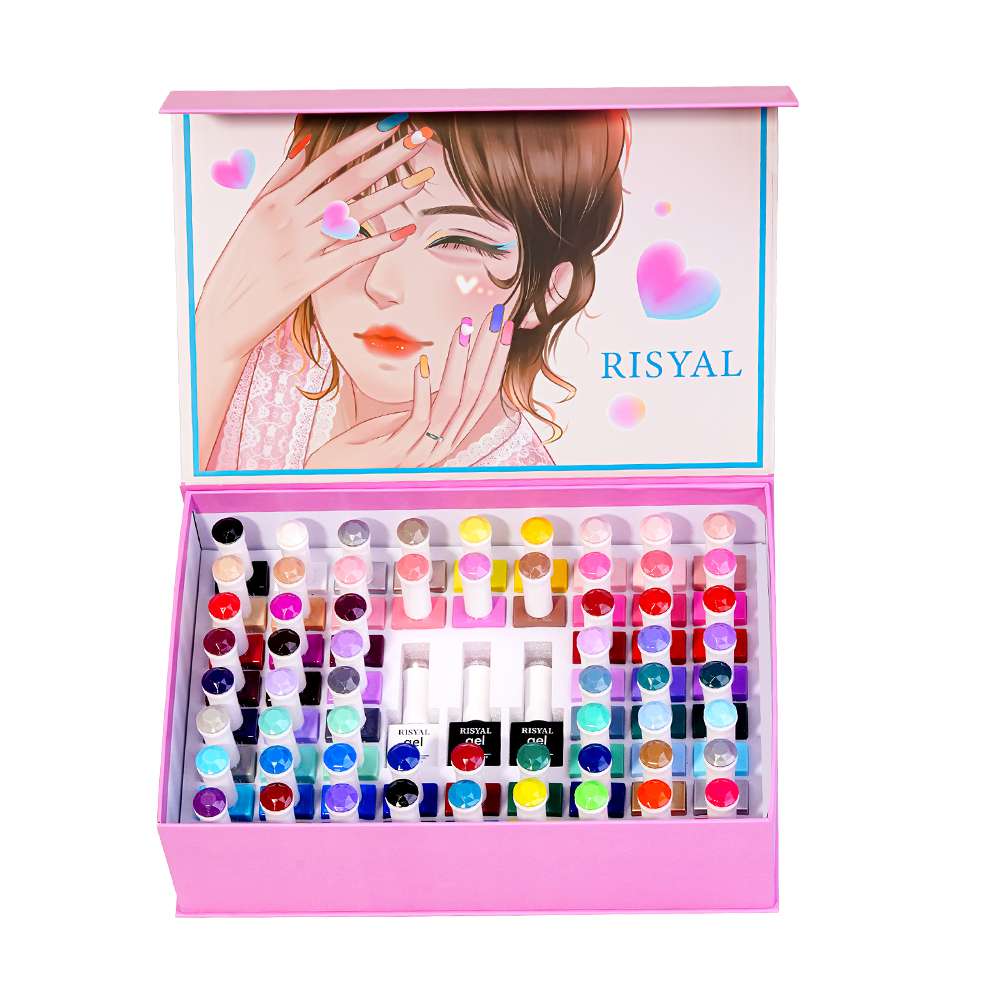
The official product listing names a Gel Nail Polish Set of 60 Colors 12ML. Its gallery shows bottles with presentation packaging, an open pink box and colour-display boards. These appearances identify the product family for the enquiry. Confirm the actual offer with the supplier; the gallery arrangement and printed numbers do not define the included bottle schedule, present availability or the fill declaration for a particular quotation.
Keep those commercial and product declarations beside the layout record as separate fields. This article addresses where an identified bottle sits in the proposed display and which holder or insert corresponds to it. A fill-quantity enquiry answers another question. Likewise, approval of a palette or a sales-unit count does not by itself identify the shape, depth or boundary of a particular display position.
Give each relevant position a reference
Request a top-view diagram or labelled photograph of the actual proposed display sample. A simple row-and-position reference can make the discussion clear, provided it is defined as a buyer enquiry label and is not presented as a manufacturer stock code. Ask the supplier to connect each relevant reference to the bottle version and the corresponding holder or insert feature.
The visible open-box catalogue presentation contains bottles within a light-coloured insert. Its image does not declare the insert material, a dimensioned opening or a confirmed retention method. Request the supplier description for the sample under review. Where the proposed layout includes an unused position, a spacer or another component, ask the supplier to identify it explicitly instead of treating every visible area as an additional bottle location.
Official catalogue appearance reference for identifying the offered sample. The image does not establish the requested seam specification, fit measurement or performance result.
Buying field
Requested supplier response
Display sample
State the exact offered display or presentation-pack reference.
Bottle version
Identify the bottle configuration used to review each relevant position.
Position label
Connect an enquiry label to the diagram and the corresponding holder.
Holder boundary
Ask for the shape or dimensions needed to identify the proposed opening.
Assembled condition
Record which packing components are present when the fit is reviewed.
Decision record
Link the supplier response, sample revision and buyer decision.
Review the bottle and holder as an identified pair
Ask the supplier to show the proposed bottle within the relevant position, then to identify the boundary used to describe that fit. A supplier response may include a drawing, a sample view or declared dimensions. Keep its scope visible. The catalogue photograph cannot establish an allowable movement, an interference value or a universal fit tolerance for every bottle or insert version.
The sample condition matters to the comparison. Record whether the cap and any proposed packing components are present, how the sample is placed for viewing and which faces the image shows. Ask for another identified view where a relevant contact area is concealed. This guide does not prescribe a force, transport procedure or cosmetic-product handling method. Agree any required evaluation separately with the supplier and retain its actual conditions.
Clarify the closing and presentation boundaries
An open display picture can leave the closing condition unresolved. If the offer includes a lid or another surrounding component, request the proposed assembled view and the relevant boundaries. Ask the supplier to identify the parts included in the displayed configuration and the parts used only to present the catalogue image. Record the response against the same sample map.
Use that response to define the packaging question without inferring product performance. The presence of a box, insert or colour card does not establish protection during transport, compatibility with a particular formula or a current included assortment. Any required information about those subjects needs its own supplier evidence. The position map remains the reference for the exact bottle-and-holder proposal being considered.
Official catalogue appearance reference for identifying the offered sample. The image does not establish the requested seam specification, fit measurement or performance result.
Control revisions through quotation and receiving
Put the display reference, bottle version and map revision together in the quotation record. A change to a bottle configuration or a holder can affect the positional reference even when the catalogue artwork stays similar. Ask the supplier to identify the changed positions and provide the updated sample information needed for the buyer decision. Preserve the previous map so the reason for the revision remains traceable.
For receiving, identify the delivered packing revision before comparing it with a sample layout. Record a difference at the relevant position and attach a corresponding view. Keep the product schedule available so that a quantity or shade discrepancy can be handled in its own record. A positional comparison should describe the arrangement that was received rather than silently replacing an unclear supplier configuration with a buyer assumption.
Identify the offered display and the actual bottle version.
Map each relevant holder to a sample view or supplier drawing.
Retain the assembled condition, revision and buyer decision.
Buyer FAQ
Does the catalogue image confirm a complete display is included?
Ask the supplier to define the actual offer. A catalogue presentation identifies the enquiry context but does not replace a confirmed contents schedule for the quoted packing unit.
Can the insert material be named from the photograph?
The visible insert can be described by appearance. Request the supplier-declared material or construction where needed; the picture alone does not establish a material specification.
Should every position use the same bottle reference?
Ask the supplier to connect each relevant position to the offered bottle version. Preserve a defined mapping instead of assuming that every pictured holder has the same configuration.
Does a close-looking fit prove shipment protection?
A sample view documents its stated condition. Any transport or other performance requirement needs a separate agreed evaluation and actual supporting evidence.
What should change when the display is revised?
Identify the revised component and affected positions, retain the earlier map and obtain the updated supplier response. Record the buyer decision for the changed sample scope.
Start with the official gel-polish listing to identify the product family. Send the mapped display enquiry through the supplier contact page, and use the buying blog for related questions. Confirm the current offered packaging and sample reference before using the layout for a purchase.
wholesale gel nail polishB2B supplier sample record